
Pilot Of Missing F-35 Says Bad Weather Caused Him To Eject And Crash Jet
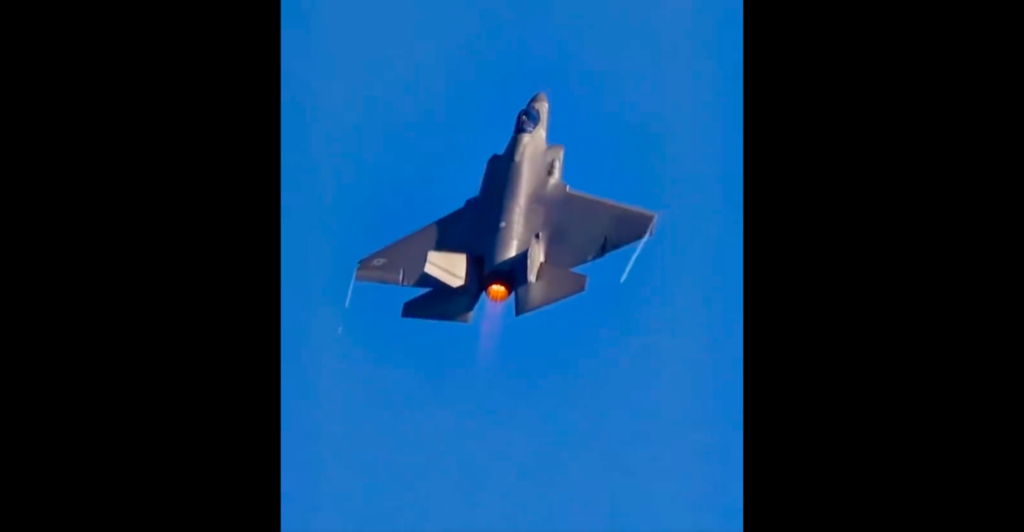
Huh? So you mean to tell me a jet that is considered to be the pinnacle of aviation technology was “lost” due to bad weather?!
I’m going to put this into perspective for you –
A Lockheed Martin F-35 Lightning II jet can break 9.0-G force with a full load of fuel and missiles, can fly at an altitude of 50,000 feet, and is equipped with an internal AND external environmental control system. Variants F-35A and F-35B have similar maximum service ceiling. Even if this jet were the F-35C variant, the ceiling is only reduced by 7,000 feet, totaling a maximum service ceiling of 43,000 feet.
Furthermore, the F-35 jet’s Internal Environmental Control System (ECS) regulates temperature, oxygen supply, and air quality inside the cockpit. It manages heating and cooling through air conditioning and heating elements, ensuring pilot comfort even at extreme altitudes. The ECS filters incoming air, removing impurities for safe breathing. It also monitors cabin pressure and oxygen levels, preventing hypoxia at high altitudes. Additionally, the ECS maintains optimal conditions for avionics systems, controlling temperature and humidity to safeguard sensitive electronics. This comprehensive system guarantees pilot well-being and system functionality, enabling peak performance in a variety of mission scenarios.
As for the External Environmental Control System (EECS), which controls environmental conditions that are outside of the aircraft, the EECS controls the temperature and pressure in the aircraft’s fuel tanks, ensuring safe and efficient fuel storage and delivery. The EECS also manages the temperature and humidity inside the weapons bays to protect munitions and electronic systems from extreme conditions during flight. It plays a crucial role in maintaining the optimal external environment for various systems and equipment, enhancing the overall effectiveness and reliability of the F-35 in combat missions.
So, go on and tell me again how the weather in SOUTH CAROLINA was bad enough to cause the pilot to eject and allow the jet to crash?
I’ll wait.
Keep Reading




Has MTG LOST HER MIND!?






Join the Conversation
Share your perspective and reply to other readers.
Create your account
Create your free Chicks on the Right account without leaving this article.
Welcome back
Log in and continue the conversation on this page.
4 Comments
First, I am a retired pilot with just shy of 13,000 hours of pilot in command time. This event is a puzzle to me. In bad weather, (IMC or instrument meteorological conditions) one flies by reference to instrumentation. The aircraft is also equipped with an autopilot that can fly the airplane. I see no reason to eject over weather conditions. I’m waiting for more information.
“The pilot said he’s unsure where the plane crashed, he lost it in the weather.” That tells me what most likely happened was that he ejected from the aircraft and it went into a cloud formation where he couldn’t see it. Not everything is some massive disinformation campaign. What benefit to the ruling elite is there to just throw away a ~$80 million dollar aircraft, especially when the pilot survived?
Did you even read the rest of the article or?
I did. You explained the ECS and EECS. From a reader’s perspective, those two systems don’t seem relevant to the post. The ECS controls environmental conditions in the cockpit, the EECS controls environmental conditions outside of the cockpit but still within the airframe (for example in the fuel tanks like you explained). But when the explanation we get for the pilot ejecting is weather, neither the ECS or EECS can have an effect on outside weather conditions. I sincerely doubt a pilot is going to eject if the cockpit gets too hot. He might call an in-flight emergency and try for the soonest landing. But outside weather can and does affect aircraft all the time. Did a lightning strike fry his electronics? Did his canopy ice over?